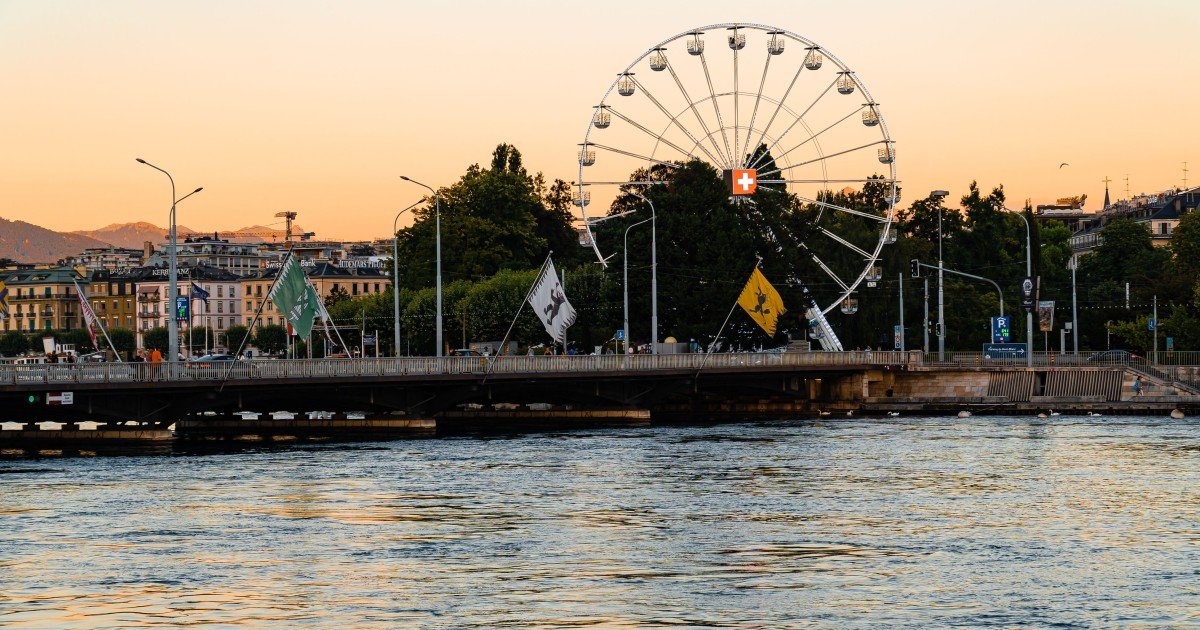
The best things to do in Geneva Switzerland are not limited to taking a photograph of the famous Jet d’Eau. Geneva is a city where a lakeside walk can lead into a medieval street, a historic cathedral can sit just minutes from contemporary art galleries, and an international neighbourhood can be followed by an afternoon beside the Rhône. Add the Alps, Lake Geneva, excellent public transportation, world-famous watchmaking and a remarkably diverse food scene, and you have a destination that deserves more than a quick stopover.
Geneva can initially feel polished and businesslike because of its role as an international centre. But spend a little time here and another personality appears.
The Old Town is full of narrow streets and unexpected corners. The lake gives the city an open, relaxed atmosphere. Carouge feels almost Mediterranean. Les Pâquis is lively and multicultural. The international district introduces visitors to Geneva’s role in diplomacy and humanitarian work.
And then there is the scenery.
On a clear day, the lake, surrounding hills and distant Alpine peaks create an extraordinary backdrop to an otherwise compact European city.
This guide brings together the most worthwhile places to visit, practical ways to explore Geneva, ideas for different types of travellers, and useful 2026 planning advice.
Why Geneva Is Worth Visiting
Geneva is often included in Switzerland itineraries because of its airport and international connections, but treating it merely as an arrival point is a mistake.
The city is compact enough to explore comfortably while offering enough variety for several days.
Its appeal comes from the combination of:
- Lake Geneva and the Rhône
- Historic Old Town
- St. Peter’s Cathedral
- Jet d’Eau
- Museums and galleries
- Swiss watchmaking heritage
- CERN and science
- United Nations and international institutions
- Carouge’s distinctive character
- Parks and lakeside promenades
- Nearby mountains
- Excellent public transport
- Easy day trips into the surrounding region
One of Geneva’s biggest advantages is that you do not need to constantly move between distant attractions.
The city is remarkably walkable, with many major sights concentrated within a manageable area. Geneva Tourism itself highlights walking as one of the best ways to understand the city’s history, architecture and lakeside atmosphere.
That makes Geneva particularly enjoyable for travellers who prefer exploring at street level rather than spending an entire holiday moving from one transport connection to another.
Explore Geneva’s Old Town
If you have never visited Geneva before, begin with the Old Town.
This is where the city’s historical personality becomes easiest to understand.
Cobblestone lanes climb and curve around historic buildings, small squares open unexpectedly between narrow streets, and centuries of political and religious history are visible in the architecture.
The Old Town is considered Switzerland’s largest historic city centre and is dominated by St. Peter’s Cathedral.
Visit St. Peter’s Cathedral
St. Peter’s Cathedral is one of Geneva’s most important landmarks.
Construction began in the 12th century, and the building later became closely associated with the Protestant Reformation and John Calvin.
For visitors, there are several reasons to go inside.
The architecture is impressive, but the archaeological remains beneath the cathedral offer another layer of history. If you are comfortable with stairs, climbing the tower rewards you with a broad view over Geneva and Lake Geneva.
The climb is not particularly suitable for everyone, so consider your fitness and mobility before heading up.
The important point is that the cathedral is not simply a photographic landmark. It helps explain why Geneva became such an influential city in European religious and intellectual history.
Stop at Place du Bourg-de-Four
After the cathedral, walk toward Place du Bourg-de-Four.
This historic square is one of the most atmospheric places in the Old Town.
Cafés and terraces make it a natural place to pause after walking through the surrounding lanes.
Rather than rushing through, take a few minutes to look at the surrounding buildings. The architectural details tell stories about how Geneva developed as a dense historic city.
Look for Geneva’s Secret Passageways
The Old Town contains historic passageways that add a little mystery to your walk.
Some were once used for practical purposes, including movement through the dense medieval city.
Not every passage is publicly accessible throughout the year, so do not assume that a doorway or narrow alley is open simply because you have seen it mentioned in a guide.
That is part of the fun: Geneva rewards curiosity, but respecting private property and access restrictions matters.
Visit Maison Tavel
Maison Tavel is another worthwhile Old Town stop.
It provides insight into Geneva’s urban history and traditional architecture.
For first-time visitors, it works particularly well alongside the cathedral because you get both a religious landmark and a look at everyday urban history.
See the Jet d’Eau and Lake Geneva
No Geneva itinerary feels complete without seeing the Jet d’Eau.
The enormous fountain rises dramatically from Lake Geneva and has become the city’s most recognisable visual symbol.
The fountain reaches about 140 metres, making it impossible to miss from many parts of the waterfront. Its origins are surprisingly practical: it developed from a water-pressure outlet associated with Geneva’s industrial system in the late 19th century before becoming a permanent city landmark.
Walk Along the Waterfront
The best way to experience the lake is not simply to photograph the fountain and leave.
Walk.
Start around the Jardin Anglais and continue along the waterfront toward the Jet d’Eau.
You will encounter gardens, benches, boats, swans and constantly changing views across the lake.
On clear days, distant Alpine scenery can make the walk particularly memorable.
The waterfront also gives you a chance to see Geneva from a different perspective.
From the Old Town, the city feels historic and enclosed.
From the lake, it suddenly feels spacious.
See the Flower Clock
The Flower Clock, or Horloge Fleurie, sits in the Jardin Anglais.
It combines Geneva’s horticultural traditions with the city’s famous association with watchmaking.
It is an easy stop because it is close to the lakefront and central areas.
You do not need to spend long here, but it fits naturally into a walking route.
Take a Lake Cruise
A boat trip on Lake Geneva is one of the more relaxing ways to experience the city.
Instead of looking across the water from the shore, you get a wider perspective of the waterfront, surrounding hills and distant mountains.
Depending on the season and timetable, different boat services and cruises may be available.
Check the current schedule before planning your day because services vary by season and weather.
For travellers who have already spent hours walking, a cruise can be a welcome change of pace.
Discover Geneva’s Museums
Geneva is a particularly good destination for travellers who enjoy museums.
The variety is impressive.
You can explore religion, humanitarian history, science, watchmaking, art and local culture within the same city.
International Red Cross and Red Crescent Museum
The International Red Cross and Red Crescent Museum explores humanitarian action and the history of the Red Cross movement.
It is located in Geneva’s international district and provides context for understanding why this city has such an important place in global humanitarian affairs.
The exhibitions are particularly suitable for visitors interested in history, international relations and social issues.
Patek Philippe Museum
Geneva and watchmaking are almost inseparable.
The Patek Philippe Museum explores the history and craftsmanship of fine watchmaking through an extensive collection.
You do not have to be a serious watch collector to appreciate the visit.
The museum helps explain how precision engineering, craftsmanship and design became such important parts of Geneva’s identity.
Museum of Art and History
The Museum of Art and History is another strong option for travellers who want variety.
Its collections cover different periods and disciplines, making it useful when you want a broader cultural overview rather than a museum focused on a single subject.
International Museum of the Reformation
For anyone interested in European religious history, this museum offers useful context about Geneva’s role in the Reformation.
It works especially well when combined with St. Peter’s Cathedral and a walking tour of the Old Town.
Experience International Geneva
Geneva’s history is not only medieval.
The city is one of the world’s best-known centres for international diplomacy and cooperation.
Visit the Palais des Nations
The Palais des Nations is an important landmark in the international district.
It is associated with the United Nations in Geneva and provides visitors with a glimpse into the city’s diplomatic role.
Tours and visitor access can vary, so check current arrangements before visiting.
The surrounding area is also interesting even if you do not enter the building.
See the Broken Chair
Near Place des Nations stands the famous Broken Chair sculpture.
The giant wooden chair with a broken leg is visually striking and carries a message connected with opposition to landmines and cluster munitions.
It is one of those Geneva landmarks that is more meaningful once you understand the story behind it.
Explore the International District
Do not treat the international district as a collection of office buildings.
It tells an important part of Geneva’s modern story.
The area is home to international organisations, diplomatic institutions and humanitarian organisations.
The International Red Cross and Red Crescent Museum can be incorporated into this part of your itinerary.
Geneva Tourism also identifies the international district as one of the city’s key areas for understanding its global role.
Visit CERN for a Different Side of Geneva
One of the most fascinating things to do around Geneva is visit CERN.
The European Organization for Nuclear Research is one of the world’s leading centres for particle physics research.
It is also an excellent example of how Geneva combines history and tradition with cutting-edge science.
CERN’s visitor experiences have exhibitions and educational elements designed to make complex scientific ideas more accessible.
For families, students and anyone curious about physics, it can be one of the most memorable stops on a Geneva trip.
Because visitor arrangements and exhibition access can change, check the current programme before travelling.
A CERN visit can take several hours, so avoid trying to squeeze it into a packed Old Town sightseeing morning.
Spend Time in Carouge
Carouge is one of the best places to visit when you want to experience a different side of the Geneva area.
The neighbourhood has a distinctive character, with colourful façades, small streets, independent shops, cafés and a relaxed atmosphere.
Geneva Tourism describes Carouge as having a bohemian feel, with picturesque streets and local events.
Why Carouge Feels Different
Carouge does not feel like a conventional extension of central Geneva.
Its architecture and street layout reflect a different historical development, giving the neighbourhood a somewhat Mediterranean atmosphere.
Spend an afternoon wandering without a strict list of attractions.
Look inside small shops, stop for coffee and enjoy the slower pace.
This is exactly the kind of place where an itinerary can become too rigid.
Leave some time unplanned.
Relax at Bains des Pâquis
Bains des Pâquis is one of Geneva’s most enjoyable waterfront spaces.
Located on Lake Geneva, it provides a place to sit beside the water, swim during suitable conditions and enjoy the atmosphere.
The area is also known for its food and social character.
One particularly appealing feature is the panoramic setting.
You can see the lake and city while enjoying a more casual atmosphere than you might find at a formal restaurant.
If you are looking for a break between museums and sightseeing, this is an excellent place to slow down.
Walk Through Parc des Bastions
Parc des Bastions is located beside the Old Town and is ideal for a relaxed break.
The park is known for the Reformation Wall, which commemorates key figures associated with the Protestant Reformation.
Large chess boards also add a playful touch to the area.
The park works well as part of an Old Town walking route.
After climbing the streets around the cathedral, walking through the greenery provides a welcome change of scenery.
Discover Geneva’s Watchmaking Heritage
Geneva’s relationship with watchmaking is much deeper than a collection of luxury boutiques.
The city has a long history of precision craftsmanship.
If you are interested in watches, you can explore specialist museums, historic streets and the wider cultural story surrounding Geneva’s watch industry.
Even if you have no interest in buying a watch, it is worth understanding why watchmaking became so important here.
It is an excellent example of how a specialised craft can become part of a city’s global identity.
Explore Geneva’s Neighbourhoods
A common mistake is to spend an entire visit around only the most famous attractions.
Geneva becomes more interesting when you explore its neighbourhoods.
Les Pâquis
Les Pâquis has a lively, multicultural personality.
It is close to the lake and offers plenty of places to eat and relax.
This is a good area for travellers who enjoy urban atmosphere and diverse food.
Eaux-Vives
Eaux-Vives is another attractive area near the lake.
It combines residential streets, cafés, restaurants and access to parks and waterfront spaces.
Plainpalais
Plainpalais has a younger and more creative energy.
It is also associated with markets and cultural activities.
If you want to see a less polished and more everyday side of Geneva, spend some time here.
Bains District
The Bains area has developed a reputation for contemporary art.
It is a useful stop for travellers who want to balance Geneva’s historic attractions with modern creative culture.
Enjoy Geneva’s Food Scene
Food is an easy way to make a city feel more personal.
Geneva offers traditional Swiss dishes alongside French, Italian, Mediterranean, Asian and international cuisines.
Try Swiss Specialities
If you are visiting Switzerland for the first time, consider trying:
- Cheese fondue
- Raclette
- Rösti
- Swiss chocolate
- Regional pastries
- Local cheeses
Geneva’s French-speaking setting also influences the city’s food culture.
You may notice a stronger French culinary influence than in some other Swiss cities.
Explore Local Markets
Markets can be a good way to experience everyday Geneva.
Depending on the day and season, you may find fresh produce, cheese, bread, flowers and prepared foods.
Markets are also useful for travellers who prefer informal meals rather than sitting in a restaurant for every meal.
Enjoy Geneva’s Parks and Green Spaces
Geneva is surprisingly green for an international city.
The lakefront parks and gardens make it easy to add outdoor time to an urban itinerary.
The Jardin Anglais, Parc des Bastions and lakeside areas are particularly convenient because they sit close to major attractions.
One of the best travel habits in Geneva is to alternate sightseeing with open-air breaks.
Instead of visiting five museums consecutively, spend an hour outside between them.
It makes the city easier to appreciate.
Take a Day Trip to Salève
If you want mountain scenery without travelling deep into the Swiss Alps, consider Salève.
The mountain rises just across the border in France and is easily accessible from the Geneva area.
The summit provides panoramic views toward Geneva, Lake Geneva and the surrounding landscape.
Hiking opportunities are available, while cable-car access can make the experience easier for visitors who do not want a long climb.
Because Salève is in France, remember that you are crossing an international border. Carry appropriate travel documents and check current transport arrangements.
Visit Nearby Vineyards
The Geneva region is also surrounded by vineyards and countryside.
If you have more than two days in the city, consider exploring the rural side of the canton.
Vineyard walks can provide a pleasant contrast to museums and city streets.
The Geneva countryside is particularly appealing in warmer months when the landscape is green and outdoor cafés and terraces are more inviting.
For visitors interested in food and wine, this can become one of the more distinctive experiences outside central Geneva.
Best Time to Visit Geneva
Geneva can be visited throughout the year, but the experience changes with the seasons.
Spring
Spring brings greener parks, milder temperatures and longer days.
It is a pleasant season for walking and sightseeing.
Summer
Summer is ideal for enjoying Lake Geneva.
Outdoor events, waterfront activities and longer daylight hours make it easy to spend much of the day outside.
Geneva’s tourism programme includes seasonal cultural and outdoor activities, so check the current 2026 calendar before travelling.
Autumn
Autumn is a good choice for travellers who prefer a calmer atmosphere.
The changing colours in parks and surrounding countryside add another dimension to the city.
Winter
Winter can be colder, but Geneva’s museums, cafés and indoor attractions make it easy to build a comfortable itinerary.
The city can also work as a base for mountain excursions when conditions allow.
How Many Days Do You Need in Geneva?
One Day in Geneva
If you have only one day, do not try to see everything.
Start with the Old Town and St. Peter’s Cathedral.
Walk through Place du Bourg-de-Four and Parc des Bastions.
Then head toward the lake.
Visit the Flower Clock and walk toward the Jet d’Eau.
Finish around the waterfront or Les Pâquis.
This gives you a balanced introduction to historic Geneva and modern lakeside Geneva.
Two Days in Geneva
Two days allow much more breathing room.
Day one: Old Town, cathedral, Maison Tavel, Parc des Bastions, lakefront and Jet d’Eau.
Day two: Choose between CERN, museums, the international district, Carouge and a lake cruise.
Do not attempt every option.
Choose according to your interests.
Three Days or More
With three or more days, add a day trip.
Salève, nearby vineyards, lakeside towns or another regional destination can expand your experience beyond the city centre.
Getting Around Geneva
One of Geneva’s strongest practical advantages is its transportation network.
However, you should walk whenever practical.
The historic centre, lakefront and several major attractions are close enough to connect naturally on foot.
For longer distances, trams, buses, trains and boats can make getting around easy.
Geneva Transport Card
Visitors staying in eligible accommodation can benefit from the Geneva Transport Card, which provides free public transportation within the relevant Geneva network during their stay.
Always confirm the current terms when booking because eligibility and conditions can change.
Geneva City Pass
If you plan to visit several paid attractions, investigate the Geneva City Pass.
The current tourism programme offers passes covering a range of activities and attractions for periods such as 24, 48 or 72 hours.
Whether it saves money depends on your itinerary.
Do the simple calculation before buying one.
If you mainly plan to walk around and enjoy free public spaces, you may not need it.
If you plan several museums, cruises and organised activities, it could be more useful.
Practical Geneva Travel Tips for 2026
Wear comfortable shoes. Geneva is easy to explore on foot, and the Old Town has slopes and cobblestones.
Plan around opening days. Museums and attractions can have different schedules.
Check lake and boat services. Timetables vary seasonally.
Allow extra time for CERN. It deserves more than a rushed visit.
Carry a light layer. Weather can change quickly around the lake.
Do not rely only on taxis. Public transport is generally much more practical for sightseeing.
Explore beyond the Jet d’Eau. Geneva becomes much more interesting once you move beyond its most photographed landmark.
Consider a city pass only after planning your itinerary. A pass is useful when the attractions you want are included and your schedule allows you to use them.
Reserve popular experiences when necessary. Some museums, tours and special events can have limited capacity.
Check current 2026 information before departure. Opening times, exhibitions, transport schedules and events can change.
A Perfect Two-Day Geneva Itinerary
Day 1: Historic Geneva and the Lake
Start in the Old Town.
Visit St. Peter’s Cathedral and explore the surrounding streets.
Walk to Place du Bourg-de-Four and stop for coffee.
Continue to Maison Tavel or the International Museum of the Reformation.
After lunch, walk through Parc des Bastions and see the Reformation Wall.
Head down toward the Jardin Anglais.
Stop at the Flower Clock.
Continue along the waterfront toward the Jet d’Eau.
End the day around Les Pâquis or the lakefront.
This route gives you a strong introduction without constantly relying on public transportation.
Day 2: Choose Your Geneva
Use the second day according to your interests.
For science lovers, visit CERN.
For history and diplomacy, explore the international district and the Palais des Nations.
For art lovers, explore the Bains district and Geneva’s museums.
For a relaxed local experience, spend the afternoon in Carouge.
For mountain views, consider Salève.
The best itinerary is not the one with the most attractions. It is the one that gives you enough time to actually experience the places you visit.
Things to Do in Geneva With Family
Geneva can be a surprisingly enjoyable family destination.
Children may enjoy the Jet d’Eau, lakefront, boat rides, parks and science experiences.
CERN can be particularly engaging for older children and teenagers because it turns complex scientific ideas into interactive experiences.
The lake also provides plenty of opportunities for outdoor time.
Families should avoid planning too many museums in one day.
Mix indoor attractions with parks, walking and waterfront activities.
Things to Do in Geneva for Couples
For couples, Geneva works well when the itinerary is not over-scheduled.
Start with a morning walk through the Old Town.
Have lunch near the lake.
Take a boat ride in the afternoon.
Spend time around the waterfront as the light changes.
For a quieter evening, explore Carouge or choose a restaurant away from the busiest tourist streets.
If you are visiting during warmer weather, a lakeside sunset can be more memorable than another formal attraction.
Free Things to Do in Geneva
You do not have to spend a fortune to enjoy Geneva.
Some of the best experiences are free or inexpensive.
You can:
- Walk through the Old Town
- See St. Peter’s Cathedral from outside
- Explore Parc des Bastions
- See the Reformation Wall
- Walk beside Lake Geneva
- Photograph the Jet d’Eau
- Visit the Jardin Anglais
- See the Flower Clock
- Explore Carouge
- Walk around the international district
- Relax at public waterfront areas
- Enjoy Geneva’s parks
This is particularly useful because Switzerland has a reputation for high travel costs.
A thoughtful itinerary can include plenty of free experiences alongside selected paid attractions.
Frequently Asked Questions
What are the best things to do in Geneva Switzerland?
The top experiences include visiting the Jet d’Eau, exploring the Old Town, climbing St. Peter’s Cathedral, walking beside Lake Geneva, visiting museums, exploring Carouge, seeing the international district and visiting CERN.
Is Geneva worth visiting?
Yes. Geneva combines history, culture, science, international institutions, lake scenery, parks, food and easy access to the surrounding mountains and countryside.
How many days are enough for Geneva?
Two days are ideal for a first visit. One day covers the main highlights, while three days or more allow time for museums, CERN, neighbourhoods and day trips.
What is Geneva famous for?
Geneva is famous for Lake Geneva, the Jet d’Eau, Swiss watchmaking, the Reformation, international organisations, humanitarian work and its location near the French Alps.
Is Geneva expensive for tourists?
Geneva can be expensive, particularly for accommodation and dining. However, many attractions such as parks, walking routes and lakeside areas can be enjoyed for little or no cost.
What can I do in Geneva for free?
Walking through the Old Town, seeing the Jet d’Eau, visiting parks, exploring the waterfront, seeing the Reformation Wall and wandering through Carouge are among the best free activities.
Can Geneva be explored on foot?
Yes. Geneva’s compact central area makes walking one of the best ways to explore. The Old Town, lakefront, parks and several cultural attractions can be connected in walking routes.
Is CERN worth visiting?
For visitors interested in science, technology, physics or education, CERN can be one of the most memorable experiences near Geneva. Check current visitor arrangements before travelling.
What should I not miss in Geneva?
Do not miss the Old Town, St. Peter’s Cathedral, Lake Geneva, the Jet d’Eau and at least one museum or cultural attraction. If you have additional time, add Carouge or CERN.
What is the best time to visit Geneva?
Late spring, summer and early autumn are particularly pleasant for walking and lakeside activities. Winter can also be enjoyable if you prefer museums, cafés and a quieter city atmosphere.
Can I visit Geneva and the French Alps in the same trip?
Yes. Geneva’s location makes it convenient for excursions toward the French Alps and nearby mountain areas. Salève is particularly accessible for travellers seeking panoramic views.
Best Things to Do in Geneva Switzerland
Geneva is easy to underestimate.
At first glance, it can appear to be a polished international city centred around diplomacy, finance and luxury watchmaking. But explore its streets slowly and a much richer destination emerges.
The best things to do in Geneva Switzerland are a mixture of famous landmarks and simple experiences.
See the Jet d’Eau, but then walk beyond it.
Visit the Old Town, but leave time to wander without a map.
Learn about watchmaking, but also explore Geneva’s contemporary art scene.
Visit the international district, then spend an afternoon beside the lake.
Take a boat, climb a tower, explore a neighbourhood, sit in a park and try something local to eat.
That balance is what makes Geneva special.
It is a city where history and modern life exist almost side by side. A medieval street can lead to a contemporary gallery. A diplomatic district can be followed by a lakeside promenade. A scientific institution working on the fundamental questions of physics is only a journey away from traditional Swiss architecture and centuries-old cultural landmarks.
For a first visit, two days provide a strong introduction. With three or four days, you can slow down and explore beyond the obvious attractions.
And perhaps that is the most useful Geneva travel tip of all: do not rush the city simply because it is compact.
Geneva rewards travellers who walk, look around and allow themselves to discover something that was not originally on the itinerary.
Informational Disclaimer: Travel conditions, attraction opening hours, museum exhibitions, transport schedules, event programmes, ticket prices and seasonal activities can change. Verify current 2026 details before making final travel arrangements, particularly for timed visits, cruises, mountain excursions and special events.

Leave a Reply