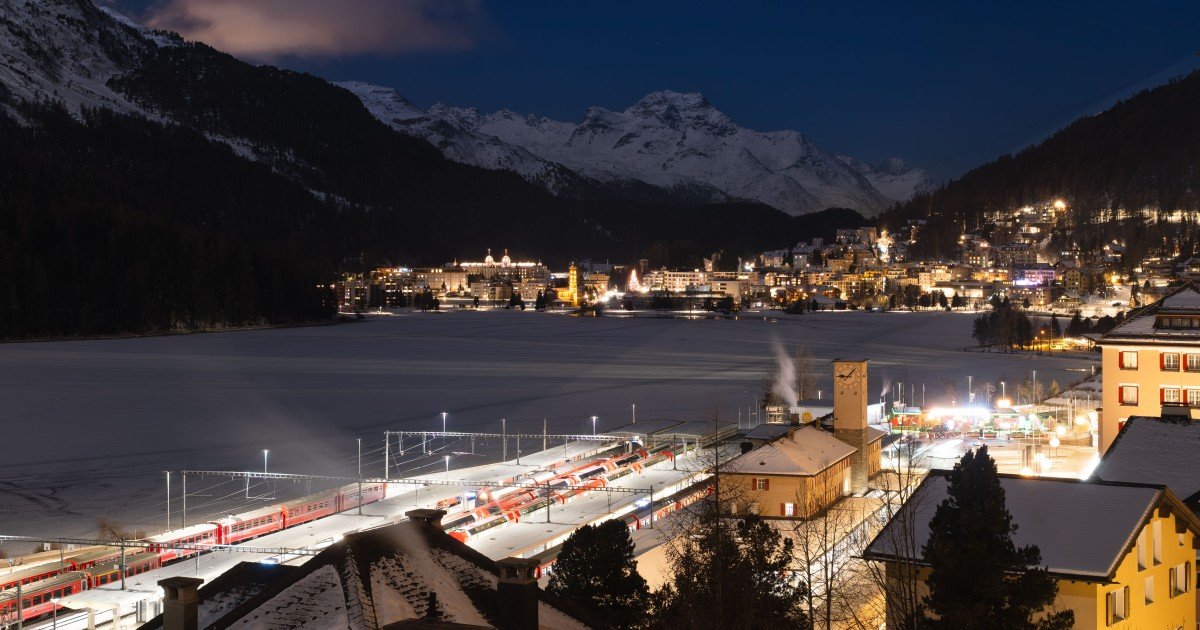
St Moritz, Switzerland is one of those destinations where the journey into the mountains is already part of the experience. Sitting at around 1,856 metres above sea level in the Upper Engadine, this famous Alpine resort combines sparkling lakes, high mountain scenery, historic Engadine traditions, world-class winter sports and a polished international atmosphere. If you are searching for st moritz, Switzerland: Things to Do, Places to Visit & Travel Guide, you will find a destination that is far more interesting than its reputation as a luxury ski resort suggests.
St. Moritz has been attracting visitors for generations, but its appeal changes dramatically with the seasons.
Winter brings skiing, snowboarding, winter walking and a lively mountain atmosphere. Summer opens up a completely different landscape of hiking trails, cycling routes, sailing, paddleboarding and mountain excursions.
Then there are the lakes.
Lake St. Moritz, Lake Silvaplana and Lake Sils create a remarkable chain of water and mountains around the valley. On a clear day, the scenery seems almost too carefully arranged to be real.
Yet St. Moritz is not simply about scenery. Its history, architecture, food, sporting culture and nearby villages give you plenty to explore when you are not looking for the next panoramic viewpoint.
This guide explains the best things to do in St. Moritz, places worth visiting, mountain experiences, seasonal activities, transport options, itinerary ideas and practical travel tips for 2026.
Why Visit St. Moritz, Switzerland?
St. Moritz has a reputation for glamour, but reducing it to luxury hotels and designer shops misses much of what makes the destination interesting.
The town is surrounded by an extraordinary natural environment and has a strong Engadine identity.
At the centre of the experience are mountains, lakes, outdoor activities and Alpine culture.
The elevation also gives St. Moritz a distinctive climate and landscape. Bright sunshine can make the valley feel surprisingly warm during the day, while temperatures can drop quickly once you head higher into the mountains.
St. Moritz is particularly appealing if you enjoy:
- Alpine scenery
- Skiing and snowboarding
- Hiking
- Mountain railways
- Scenic lakes
- Cycling and mountain biking
- Winter walking
- Water sports
- Luxury and traditional Alpine culture
- Art and museums
- Gourmet food
- Scenic train journeys
- Romantic escapes
- Outdoor adventures
One of the best things about visiting is that you do not have to be an expert skier or experienced mountaineer to enjoy the area.
There are easy walks, scenic viewpoints, mountain restaurants, lakeside paths and comfortable transport options for visitors who simply want to appreciate the landscape.
Best Places to Visit in St. Moritz
Lake St. Moritz
Lake St. Moritz is one of the first places you should explore.
The lake sits directly beside the town and provides an impressive foreground for the surrounding mountains.
In summer, the water becomes a playground for sailing, stand-up paddleboarding, rowing and other activities. In winter, the frozen landscape can look completely different.
A walk around the lake is one of the easiest ways to appreciate St. Moritz without needing special equipment.
The reflections of the mountains on calm water are particularly beautiful early in the day.
Take your time here.
It is tempting to photograph the lake and move on, but the scenery changes constantly with sunlight and weather.
St. Moritz Dorf
The central village, often called St. Moritz Dorf, is where much of the town’s famous atmosphere comes together.
Elegant buildings, shops, restaurants, cafés and historic streets create a distinctly upscale Alpine environment.
However, look beyond the modern luxury.
You will find traditional Engadine architectural elements alongside contemporary buildings, showing how the resort has developed over time.
Walking through the village is particularly pleasant when you are not following a strict itinerary.
St. Mauritius Church
The Church of St. Mauritius is one of the historic landmarks worth seeing in the centre.
Its tower is part of the visual identity of St. Moritz and provides a reminder that the settlement’s history extends much further back than the modern resort era.
It is an easy stop during a walk through the village.
Segantini Museum
Art lovers should make time for the Segantini Museum.
The museum is dedicated to Giovanni Segantini, an important artist associated with the Alpine landscape.
Segantini’s work is particularly relevant to St. Moritz because his paintings captured the mountains, rural life and light of the Engadine region.
The museum’s architecture and location also contribute to the experience.
It is a useful reminder that St. Moritz has a cultural history as well as a sporting one.
Engadiner Museum
The Engadiner Museum offers insight into the traditional culture and lifestyle of the Engadine region.
Its collections help visitors understand how people historically lived in this high Alpine environment.
If you have already spent time looking at modern St. Moritz, the museum provides valuable context.
It shows the traditional architecture, household objects, craftsmanship and cultural practices that existed long before the arrival of international tourism.
St. Moritz Bad
St. Moritz Bad lies closer to the lake and provides a slightly different atmosphere from the upper village.
It is also an important starting point for certain mountain transport connections and outdoor activities.
The area is particularly useful if your itinerary includes hiking, swimming or accessing mountain lifts.
Best Things to Do in St. Moritz
Go Up Corviglia and Piz Nair
Corviglia is St. Moritz’s local mountain and one of the most important recreational areas in the region.
In winter, it becomes a major ski area.
In summer, hiking and mountain biking take centre stage.
From Corviglia, you can continue toward Piz Nair, which reaches about 3,057 metres above sea level.
The views from higher elevations can be spectacular, extending across the Engadine valley and surrounding mountains.
One important 2026 planning detail is that the St. Moritz Dorf–Chantarella–Corviglia funicular is scheduled to be closed during summer 2026 for extensive maintenance. Alternative connections include the Signal cable car from St. Moritz Bad and the Celerina–Marguns gondola, with onward connections toward Corviglia.
This is exactly the kind of seasonal detail worth checking before you travel.
Hike in the Engadine
St. Moritz is surrounded by hiking opportunities.
You can choose from short scenic walks to longer mountain routes.
The right trail depends heavily on your fitness, experience, weather and the time of year.
For a relaxed experience, choose a lakeside or lower-elevation route.
For more dramatic scenery, head higher into the mountains.
Always check trail conditions before setting out. Snow can remain at higher elevations even when summer weather has arrived in the valley.
Visit Muottas Muragl
Muottas Muragl is one of the most rewarding viewpoints near St. Moritz.
A historic funicular carries visitors up to around 2,456 metres, where panoramic views extend across the Upper Engadine lakes and toward the Bernina Massif.
The mountain is not simply about looking at the view.
There are walking routes, winter activities, a panoramic restaurant and family-friendly spaces.
The Philosophers’ Path is an especially interesting option for visitors who want a thoughtful walk rather than a demanding mountain hike.
In winter, snowshoe routes and winter walks provide another way to experience the mountain.
Take a Trip to Corvatsch
Corvatsch is another major mountain destination in the Engadine.
The area is known for its high-altitude scenery and winter sports, while summer brings hiking and panoramic excursions.
One reason to visit Corvatsch is the opportunity to experience a different part of the Engadine landscape rather than repeatedly returning to the same viewpoint.
If you are staying several days, combining Corviglia with Corvatsch can give your trip more variety.
Explore Lake Silvaplana
Lake Silvaplana is one of the most beautiful lakes near St. Moritz.
It is surrounded by mountains and is particularly well known for wind and water sports.
In summer, the afternoon Maloja wind can create excellent conditions for sailing, windsurfing and kitesurfing.
Stand-up paddleboarding is another popular activity when the water is calmer.
Even if you do not participate in water sports, the lake is worth visiting.
The landscape is spectacular, and the surrounding paths provide opportunities for walking and cycling.
Visit Lake Sils
Lake Sils is farther along the Upper Engadine valley and offers a quieter atmosphere.
The lake is surrounded by mountains and traditional villages, making it an excellent place for travellers who want to experience the landscape away from the busier centre of St. Moritz.
A visit to the lake can be combined with Sils Maria.
Explore Sils Maria
Sils Maria is one of the most charming villages in the region.
It has strong cultural associations and is surrounded by beautiful Alpine scenery.
The village is closely connected with philosopher Friedrich Nietzsche, who spent summers here.
The Nietzsche House provides insight into his relationship with the region.
Even if philosophy is not your main interest, Sils Maria is worth visiting for its setting and traditional character.
Ride the Bernina Express
One of the most memorable ways to experience the wider region is by train.
The famous Bernina route connects the Engadine with the Italian-speaking area of Graubünden and continues toward Tirano in Italy.
The railway journey is celebrated for dramatic mountain landscapes, bridges, valleys and engineering achievements.
You do not necessarily need to treat the journey as a simple transfer.
Make the train ride part of the holiday.
Sit by the window, keep your camera ready and let the landscape unfold.
Try Engadine Cuisine
Food is an important part of the St. Moritz experience.
Look for traditional dishes and ingredients from Graubünden and the Engadine.
One classic is Engadine nut tart, a rich pastry filled with caramelised walnuts.
Other regional specialities include dishes based around barley, cheese, meat and local Alpine ingredients.
You will also find international cuisine throughout St. Moritz, from casual cafés to sophisticated restaurants.
The best approach is to try at least one traditional regional dish rather than eating only familiar international food.
Winter in St. Moritz
Winter is when St. Moritz becomes globally famous.
Skiing and Snowboarding
Corviglia is the main local ski area and offers terrain suitable for different levels of skiers.
Beginners can use dedicated learning areas, while more experienced skiers have access to challenging slopes and higher mountain terrain.
The broader Engadine region provides additional ski areas, including Corvatsch and Diavolezza.
If you are visiting specifically for skiing, compare the terrain and operating schedules before deciding where to spend each day.
Winter Hiking
You do not need skis to enjoy St. Moritz in winter.
Winter hiking trails provide an opportunity to experience the snowy landscape at a slower pace.
This is especially enjoyable on sunny days when the mountains appear sharply defined against the sky.
Snowshoeing
Snowshoeing is another good choice for visitors who want to get away from busy ski slopes.
Muottas Muragl, among other areas, offers opportunities for snowshoe excursions.
Choose marked routes and check conditions before heading out.
Tobogganing
Tobogganing adds a playful element to a winter trip.
Muottas Muragl has a long toboggan run that descends through the mountain landscape.
It can be particularly enjoyable for families and travellers who want a break from conventional skiing.
Winter Events
St. Moritz has a long history of major sporting and cultural events.
The calendar changes each year, so check the 2026 programme before travelling if you want to attend a particular event.
Events can also affect accommodation availability and prices.
Summer in St. Moritz
Summer reveals a completely different side of the resort.
Hiking
This is arguably the best season for exploring the wider mountain landscape on foot.
Trails range from gentle paths around lakes to demanding high-altitude routes.
Do not underestimate the effects of elevation.
A route that looks short on a map can feel much harder when climbing at altitude.
Cycling and Mountain Biking
The Engadine has an extensive network of cycling and mountain-biking routes.
You can choose relatively gentle valley rides or more technical mountain trails.
If you are renting equipment, ask about current trail conditions and choose a route appropriate to your ability.
Sailing and Water Sports
The lakes around St. Moritz become lively in summer.
Lake St. Moritz and Lake Silvaplana are particularly popular for sailing and paddle sports.
The famous Maloja wind contributes to the region’s reputation for sailing and wind sports.
For beginners, lessons are available through local schools and operators.
Golf
Golf enthusiasts can find courses in the wider Engadine valley.
The combination of mountain scenery and high-altitude landscapes makes golfing here quite different from playing in a typical lowland setting.
Relax Beside the Lakes
Not every summer activity needs to be adventurous.
Sometimes the best plan is to walk beside a lake, sit in the sunshine and enjoy the scenery.
St. Moritz can reward slow travel just as much as an activity-packed itinerary.
Best Day Trips From St. Moritz
Pontresina
Pontresina is one of the most attractive nearby villages.
It combines historic Engadine architecture with access to mountain trails and glaciers.
It is a good base for exploring the Bernina area.
Diavolezza
Diavolezza provides spectacular high-mountain views toward the Bernina massif.
It is particularly impressive for travellers interested in glaciers and dramatic Alpine scenery.
The cable car makes the summit area accessible without a long climb.
Morteratsch Glacier
The Morteratsch area offers a chance to experience one of the region’s famous glaciers.
A walking route provides an introduction to the glacial landscape.
Conditions and access can change with the season, so check current information before travelling.
Samedan
Samedan provides a quieter look at Engadine life.
It is also home to the region’s airport and has historic buildings and mountain surroundings.
Bergün
Bergün is a beautiful traditional village and another worthwhile destination for travellers interested in Graubünden’s architecture and railway heritage.
It can also be incorporated into a wider route through the Albula region.
How Many Days Do You Need in St. Moritz?
One Day in St. Moritz
A single day gives you a taste rather than a complete experience.
Explore the village, walk around Lake St. Moritz and take one mountain excursion.
If time allows, visit the Segantini Museum or Engadiner Museum.
This is enough to understand the destination but not enough to explore the wider valley properly.
Two Days in St. Moritz
Two days provide a better introduction.
Day one: Explore the village, lake and cultural attractions.
Day two: Visit Corviglia, Muottas Muragl or another mountain destination.
Three to Four Days
Three or four days are ideal if you want to combine mountains, lakes and nearby villages.
You can dedicate one day to hiking, one to a mountain railway excursion and another to exploring Pontresina, Sils Maria or the Bernina region.
Winter visitors may want additional days because ski conditions and weather can influence plans.
Best Time to Visit St. Moritz
Winter
Choose winter for skiing, snowboarding, snowshoeing and the classic snowy St. Moritz experience.
December through March generally forms the core winter travel period, but actual snow and lift conditions vary.
Spring
Spring can be complicated at high altitude because snow conditions change quickly.
Lower-elevation activities may become easier while some mountain routes remain winter-like.
If your priority is skiing, check conditions carefully.
Summer
Summer is excellent for hiking, cycling, water sports and mountain excursions.
June through September generally offers the broadest range of outdoor activities, although individual mountain facilities have their own operating calendars.
Autumn
Autumn can be beautiful and peaceful.
The landscape takes on warmer colours, and hiking conditions can remain pleasant before winter returns.
However, some seasonal mountain facilities close between summer and winter operations.
Always check opening dates before planning an autumn trip.
Getting Around St. Moritz
St. Moritz is well connected by Swiss public transportation.
The railway is particularly useful for reaching nearby towns and experiencing scenic routes.
Local buses connect different parts of the resort and surrounding areas.
Mountain railways, funiculars and cable cars provide access to higher elevations.
For many visitors, public transportation is preferable to driving.
Parking can be limited or expensive, while trains and buses allow you to enjoy the scenery without concentrating on the road.
Arriving by Train
Arriving by train can itself become one of the highlights of your journey.
The route into the Engadine passes through spectacular Alpine scenery, and the railway network provides connections to destinations throughout Graubünden.
If you are coming from other parts of Switzerland, allow enough time to appreciate the journey rather than viewing it simply as a necessary transfer.
Do You Need a Car?
For most St. Moritz holidays, you do not need a car.
Public transport is convenient for the major attractions.
A car can be useful if you plan to explore isolated mountain roads or have a broader road-trip itinerary.
For a normal stay, however, trains, buses and mountain railways are more practical.
Practical St. Moritz Travel Tips for 2026
Prepare for altitude. St. Moritz itself sits high above sea level, and mountain excursions take you considerably higher.
Layer your clothing. Conditions can change quickly between the valley and mountain summits.
Check lift schedules. Mountain transport does not operate continuously throughout the year.
Pay attention to the 2026 Corviglia maintenance closure. The Dorf–Chantarella–Corviglia funicular is scheduled for summer maintenance, with alternative routes available.
Book accommodation early for winter. Peak ski periods can become busy.
Do not assume summer means every mountain lift is operating. Seasonal transitions can affect access.
Bring proper walking shoes. Even easy-looking mountain paths can be uneven.
Check weather before mountain trips. Clouds can dramatically reduce visibility.
Try regional food. Engadine specialities provide a stronger connection to the destination.
Use trains when possible. The journey through Graubünden is part of the experience.
Leave room for slow travel. A lakeside walk can be just as rewarding as another scheduled attraction.
A Simple Two-Day St. Moritz Itinerary
Day 1: Explore the Town and Lake
Begin in St. Moritz Dorf.
Walk through the centre and see the Church of St. Mauritius.
Continue toward Lake St. Moritz and walk along the shoreline.
Have lunch in the village.
In the afternoon, visit the Segantini Museum or Engadiner Museum.
Later, find a viewpoint overlooking the lake and surrounding mountains.
Finish with dinner featuring regional Engadine cuisine.
Day 2: Mountain Adventure
Choose Corviglia, Piz Nair or Muottas Muragl.
Spend the morning enjoying the mountain scenery.
If conditions are suitable, take a short hike.
Have lunch at a mountain restaurant.
Return to St. Moritz in the afternoon.
If you still have energy, explore Lake St. Moritz again or take a relaxed walk through the village.
For winter travellers, replace hiking with skiing, snowboarding, snowshoeing or winter walking.
Is St. Moritz Good for Families?
Yes, although the best family activities depend on the season.
Summer provides lakes, gentle walks, mountain excursions and outdoor activities.
Winter offers skiing schools, beginner areas, tobogganing and snow activities.
Muottas Muragl is particularly family-friendly because it combines mountain views with activities and accessible facilities.
Families should plan around weather and avoid assuming that every mountain route is suitable for young children.
Is St. Moritz Good for Couples?
St. Moritz is an excellent destination for couples.
The combination of lakes, mountains, stylish restaurants and scenic excursions makes it easy to create a romantic itinerary.
You could begin with breakfast overlooking the mountains, spend the afternoon beside a lake and finish with dinner in the village.
In winter, a snowy mountain landscape creates a completely different atmosphere.
For couples who prefer quieter experiences, consider visiting Sils Maria, Muottas Muragl or one of the smaller Engadine villages.
Is St. Moritz Expensive?
St. Moritz is widely regarded as one of Switzerland’s more expensive resort destinations.
Accommodation, restaurants, mountain transport and winter activities can add up quickly.
That does not mean you need a luxury budget to visit.
You can balance costs by:
- Choosing accommodation outside the most expensive central areas
- Using public transportation
- Eating some casual meals
- Hiking and enjoying free outdoor scenery
- Planning mountain excursions carefully
- Comparing transport passes
- Visiting museums selectively
The landscape itself is one of the destination’s greatest attractions, and enjoying it does not always require an expensive activity.
What Makes St. Moritz Different From Other Swiss Destinations?
St. Moritz has a rare combination of high-altitude Alpine scenery, resort culture, sporting heritage and Engadine traditions.
Some Swiss destinations are primarily known for hiking.
Others are focused on skiing, historic architecture or lakes.
St. Moritz brings several of these experiences together.
It also has a long history as a pioneering Alpine resort, yet the surrounding villages and landscapes preserve a quieter regional identity.
That contrast is part of its appeal.
You can spend an afternoon in a sophisticated resort environment and then travel a short distance to a traditional village where the pace feels completely different.
Frequently Asked Questions
What is St. Moritz famous for?
St. Moritz is famous for skiing, luxury tourism, Alpine scenery, Lake St. Moritz, its high-altitude location, winter sports heritage and access to the Engadine mountains.
Is St. Moritz worth visiting?
Yes. St. Moritz is worth visiting for its combination of mountain scenery, lakes, outdoor activities, cultural attractions, traditional villages and scenic railway journeys.
How many days do you need in St. Moritz?
Two days are enough for a first introduction. Three or four days are better if you want to explore surrounding lakes, mountains and villages.
What are the best things to do in St. Moritz?
Popular experiences include visiting Lake St. Moritz, going to Corviglia and Piz Nair, visiting Muottas Muragl, exploring Sils Maria, hiking, skiing and taking a scenic train journey.
Is St. Moritz only for rich travellers?
No. Although the resort has a strong luxury reputation, travellers can enjoy its lakes, hiking trails, public spaces, museums and mountain scenery without staying at luxury properties.
Is St. Moritz better in summer or winter?
It depends on your interests. Winter is ideal for skiing and snow activities, while summer is better for hiking, cycling, water sports and exploring the lakes and mountain trails.
Can you visit St. Moritz without a car?
Yes. Trains, buses and mountain railways make it possible to explore the town and much of the surrounding Engadine region without driving.
What is the best mountain to visit from St. Moritz?
Corviglia and Piz Nair are excellent choices for panoramic views and mountain activities. Muottas Muragl is another strong option for broad views over the Engadine lakes.
Can beginners ski in St. Moritz?
Yes. The local ski areas include beginner-friendly facilities and ski schools. Beginners should choose terrain appropriate to their ability and consider professional instruction.
What can you do in St. Moritz in summer?
Summer activities include hiking, cycling, mountain biking, sailing, stand-up paddleboarding, sightseeing, scenic railway journeys and exploring nearby villages.
What can you do in St. Moritz without skiing?
You can hike, snowshoe, take mountain railways, enjoy winter walking, visit museums, explore the village, go to viewpoints, eat regional food and enjoy the snowy landscape.
Is St. Moritz expensive?
It can be expensive, particularly for accommodation, dining and mountain activities. Careful planning and a mix of free outdoor experiences and paid attractions can make the trip more manageable.
Is St. Moritz good for families?
Yes. Families can enjoy mountain railways, beginner ski areas, winter activities, hiking, lakes and attractions such as Muottas Muragl.
What day trips can you take from St. Moritz?
Popular options include Pontresina, Sils Maria, Diavolezza, Morteratsch Glacier, Samedan and scenic railway journeys through the Bernina region.
Why St. Moritz Deserves a Place on Your Switzerland Itinerary
St. Moritz, Switzerland has a reputation for glamour, but its greatest attraction is much simpler: the landscape.
The lakes, mountains and wide Engadine valley create a setting that feels impressive in every season.
Winter turns the region into a snow-covered playground, while summer reveals hiking trails, mountain lakes and outdoor activities that are easy to overlook if you only associate St. Moritz with skiing.
The best itinerary is not necessarily the one with the most attractions.
Spend time around Lake St. Moritz.
Take a mountain railway without rushing back down.
Explore an Engadine village.
Try a local dish.
Ride a scenic train through the mountains.
Watch the light change across the valley.
If you have only one day, concentrate on the town, lake and one mountain experience. With two days, add a museum and a longer excursion. With three or four days, slow down and explore the wider Engadine.
And if you visit in 2026, check seasonal mountain transport carefully, particularly because of the planned summer maintenance affecting the direct Corviglia funicular route.
St. Moritz is at its best when you allow the destination to breathe.
It is not just a place to ski, shop or photograph.
It is a place to experience the high Alps at a slower, more thoughtful pace.
Informational Disclaimer: Mountain transport, lift operations, trail conditions, attraction opening hours, event schedules, weather, ticket prices and seasonal services can change. Always verify current information before making final travel arrangements or participating in outdoor activities.

Leave a Reply