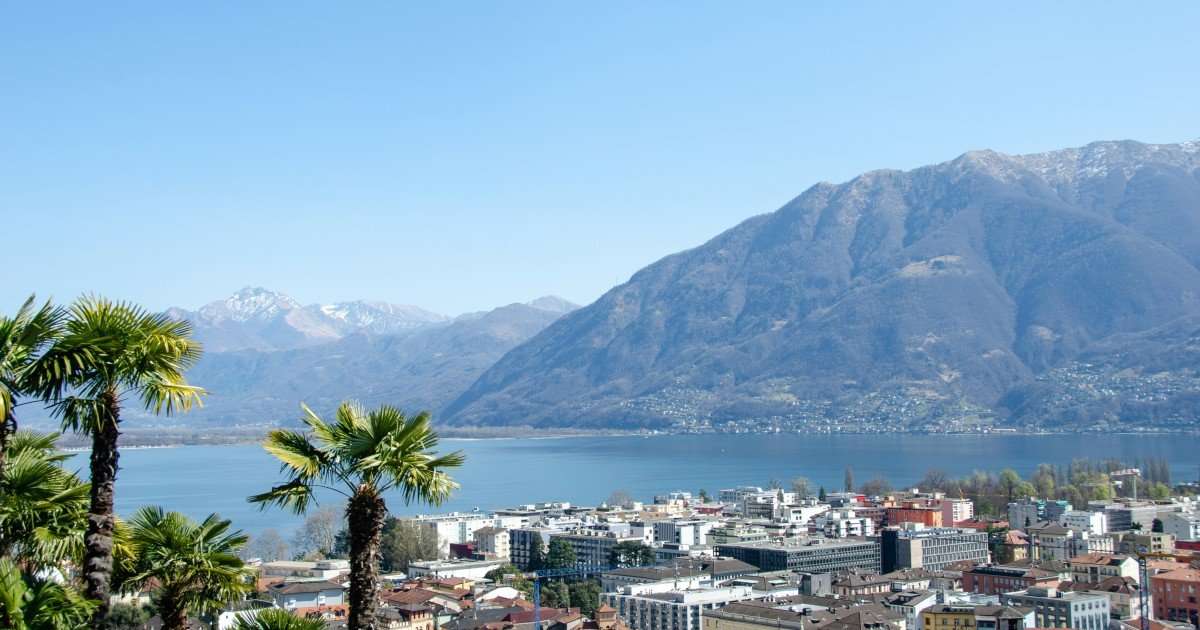
If you are looking for a Swiss destination where alpine scenery meets Italian-style charm, Ascona, Switzerland deserves a place on your travel list. Set beside Lake Maggiore in the canton of Ticino, Ascona feels noticeably different from the classic mountain towns many visitors associate with Switzerland. Colourful lakeside buildings, palm trees, narrow old-town lanes, outdoor cafés, mountain views, art, culture, and a mild climate give the town a distinctly Mediterranean character.
Ascona is not a place you need to rush through. Its appeal is in the details: sitting beside the lake with a coffee, wandering through historic streets, watching boats move across the water, hiking toward Monte Verità, or taking a short boat ride to the remarkable Brissago Islands. In 2025, Ascona was named Swiss Village of the Year, recognition that reflects its combination of authenticity, scenery, culture, and distinctive lakeside atmosphere.
Whether you are planning a romantic holiday, a family trip, a relaxing weekend, or a longer Ticino itinerary, this Ascona travel guide covers the best things to do, places to visit, practical planning tips, food experiences, day trips, seasons, and ideas for making the most of your stay.
3 High-CTR Blog Title Options
- Ascona, Switzerland: Best Things to Do & Travel Guide
- Ascona Switzerland Travel Guide: Places to Visit in 2026
- Ascona, Switzerland: Things to Do, See & Explore
Where Is Ascona, Switzerland?
Ascona is located in southern Switzerland in Ticino, the country’s Italian-speaking canton. The town sits on the northern shore of Lake Maggiore, close to Locarno and within easy reach of some of Ticino’s most attractive valleys, mountains, villages, and cultural sites.
Its location is one of its biggest advantages. You can spend the morning exploring a historic town centre, enjoy lunch beside the lake, take a boat across Lake Maggiore in the afternoon, and finish the day watching the mountains change colour as the sun sets.
Unlike destinations dominated by high Alpine terrain, Ascona has a softer landscape. The lake, Mediterranean vegetation, colourful buildings, and surrounding mountains create a setting that feels almost like a meeting point between Switzerland and northern Italy.
The town is also an excellent base for exploring the wider Lake Maggiore region. Locarno is nearby, while places such as Brissago, the Verzasca Valley, the Centovalli region, and the Brissago Islands can be incorporated into a broader itinerary.
For travellers visiting Switzerland for the first time, Ascona can therefore offer something different from cities such as Zurich or Geneva and from mountain resorts such as St. Moritz.
Why Visit Ascona?
The easiest way to understand Ascona is to think beyond conventional sightseeing.
You do not visit Ascona simply to tick attractions off a list. You visit because the town encourages a slower style of travel.
The famous lakeside promenade is lined with colourful façades, cafés, restaurants, and places to sit and enjoy views across Lake Maggiore. The historic centre adds narrow lanes, small shops, historic buildings, and architectural details that reward visitors who explore on foot.
The surrounding landscape provides another layer. Mountains rise beyond the lake, while the local climate supports vegetation that looks surprisingly Mediterranean for Switzerland.
Here are some of the strongest reasons to include Ascona in a Switzerland itinerary:
- Beautiful Lake Maggiore scenery
- Mediterranean-style atmosphere
- Charming historic centre
- Easy access to boat excursions
- Monte Verità and its cultural history
- Brissago Islands botanical gardens
- Outdoor activities and walking routes
- Art and cultural attractions
- Excellent base for exploring Ticino
- Relaxed atmosphere compared with larger cities
The combination is what makes Ascona memorable. It is scenic without feeling entirely focused on scenery and historic without becoming a museum-like destination.
Best Things to Do in Ascona
1. Walk Along the Ascona Lakeside Promenade
The lakeside promenade is the natural starting point for exploring Ascona.
Take your time here. Rather than simply walking from one end to the other, stop occasionally to appreciate the combination of water, architecture, mountains, and vegetation.
The promenade is particularly attractive because of its colourful buildings and open views across Lake Maggiore. Cafés and restaurants make it easy to turn a simple walk into a relaxed afternoon. Markets and events also take place along the waterfront during the year.
Morning is ideal if you prefer quieter surroundings. Late afternoon is excellent for photography, while evening brings a more atmospheric feel as lights begin to appear around the waterfront.
The promenade is also associated with cultural events, including JazzAscona, an important annual jazz festival that contributes to the town’s lively cultural identity.
Travel Tip
Do not schedule the promenade as a ten-minute stop. Give yourself at least an hour or two to enjoy it properly, especially if you want to sit beside the lake.
2. Explore Ascona Old Town
After the lake, head into the old town.
This is where Ascona becomes more intimate. Narrow streets lead between historic buildings, small stores, cafés, galleries, and local businesses.
The historic centre is compact enough to explore comfortably on foot. You do not need an elaborate route. Simply wander, look upward at the architecture, and occasionally follow a lane that catches your attention.
One of the most important landmarks is the Church of Saints Peter and Paul, known for its historic architecture, frescoes, and Baroque elements.
Piazza Giuseppe Motta
Piazza Giuseppe Motta is one of the most recognizable places in the old town. Its location near the lake makes it an excellent spot for combining sightseeing with a relaxed break.
Rather than rushing through the square, take time to observe everyday life. One of the pleasures of travelling through Ticino is seeing how local life, tourism, architecture, food, and outdoor culture blend together.
3. Visit Monte Verità
Monte Verità is one of Ascona’s most fascinating attractions because its significance goes beyond scenery.
The hill above Ascona has a remarkable cultural history connected with alternative lifestyles, art, architecture, nature, and social movements. Today, visitors can explore the museum and cultural complex while enjoying views over the surrounding landscape.
Monte Verità can be reached on foot, although the climb can be demanding. A bus provides an easier alternative for travellers who would rather save their energy for exploring the area itself.
The destination is particularly interesting for travellers who enjoy places with a story.
You are not simply climbing a hill for a viewpoint. You are stepping into a location that played an unusual role in European cultural history.
Who Will Enjoy Monte Verità?
Monte Verità is especially suitable for:
- History enthusiasts
- Architecture lovers
- Culture-focused travellers
- Photographers
- Hikers
- Visitors interested in unusual destinations
If you enjoy discovering the background behind a place rather than only photographing it, this should be high on your list.
4. Take a Boat Trip on Lake Maggiore
A visit to Ascona without spending time on Lake Maggiore would feel incomplete.
Boat travel changes your perspective completely. From the water, Ascona’s colourful waterfront appears against a backdrop of mountains, while the scale of the lake becomes much easier to appreciate.
Boat excursions can also connect Ascona with nearby destinations, including the Brissago Islands and other lakeside locations.
One particularly useful excursion is the short boat journey from Ascona to the Brissago Islands. The crossing takes around 15 minutes according to the regional tourism information, making it one of the easiest lake excursions to add to a day in Ascona.
For travellers who prefer scenic experiences over packed sightseeing schedules, a boat trip can be one of the highlights of the entire visit.
5. Explore the Brissago Islands
The Brissago Islands are among the most distinctive places to visit near Ascona.
Located in Lake Maggiore, the islands contain Switzerland’s only botanical garden situated on an island. The larger island, San Pancrazio, is open to visitors and contains a remarkable collection of plants from Mediterranean and subtropical regions around the world.
The 2026 visitor season runs from March 18 to November 8, making spring through autumn the most practical period for including the islands in an itinerary.
The botanical garden covers approximately 25,000 square metres and contains more than 2,000 plant species. The variety reflects the unusual climate around Lake Maggiore, where conditions allow plants that would not normally thrive in much of Switzerland to grow outdoors.
The experience is more than a conventional garden visit.
Expect winding paths, unusual vegetation, peaceful corners, lake views, and areas that feel surprisingly tropical.
How Long Should You Spend There?
Allow several hours if you want to explore without rushing.
A short visit is possible, but the botanical collections and island environment are better appreciated at a relaxed pace.
Families can also enjoy the island’s child-friendly activities, including a treasure-hunt experience.
6. Discover Ascona’s Art and Museums
Ascona has a strong connection with art and culture.
Travellers interested in museums can explore places such as Museo Castello San Materno and the Fondazione Rolf Gérard. Monte Verità also adds a cultural and historical dimension to the destination.
These attractions are useful on days when the weather is less suitable for outdoor activities.
They also help balance an itinerary. Ascona is beautiful, but a meaningful trip should not be based entirely on scenic viewpoints. Understanding local art, architecture, history, and cultural development gives you a deeper appreciation of the town.
For visitors staying several nights, dedicating part of one day to cultural attractions can make the trip feel much more varied.
7. Enjoy the Mediterranean Side of Switzerland
One of the most enjoyable things to do in Ascona is simply experience its atmosphere.
Palm trees, colourful buildings, outdoor cafés, lakefront dining, mountains, and warm-season sunshine create an environment that feels very different from the image many international visitors have of Switzerland.
The local climate is relatively mild, and Lake Maggiore contributes to conditions that support Mediterranean and subtropical vegetation.
This is why Ascona works so well for travellers who want a break from intensive sightseeing.
You can walk.
You can eat.
You can sit beside the water.
You can take photographs.
And you can still feel that you are surrounded by an unmistakably Swiss landscape.
Best Places to Visit Near Ascona
Ascona is small enough to explore comfortably, but its location makes it even more valuable as a base for day trips.
Locarno
Locarno is one of the easiest additions to an Ascona itinerary.
The two destinations are close enough that you can combine them during the same trip. Locarno offers its own lakefront atmosphere, cultural attractions, shopping areas, and access to mountain excursions.
A day combining Locarno and Ascona works particularly well for first-time visitors to the Lake Maggiore region.
Brissago
Brissago lies along the lake and offers another perspective on Ticino’s lakeside culture.
The lower historic part of Brissago developed around the Church of San Pietro e Paolo, with narrow lanes leading toward the water and gardens containing Mediterranean plants.
Brissago is particularly useful as part of a boat-based itinerary.
Verzasca Valley
If you want to exchange lakeside cafés for dramatic natural scenery, consider the Verzasca Valley.
The valley is known for clear mountain water, rocky landscapes, traditional stone architecture, and hiking opportunities.
It offers a very different side of Ticino and demonstrates how quickly the landscape can change once you leave Lake Maggiore.
Centovalli Region
The Centovalli area is another excellent option for travellers who enjoy scenic journeys.
The region is associated with mountain villages, valleys, forests, and spectacular railway scenery. Switzerland Tourism highlights the Vigezzina-Centovalli Railway as one of the notable experiences connected with the wider Ascona-Locarno area.
For many travellers, the journey itself becomes part of the attraction.
Best Time to Visit Ascona
Ascona can be visited in different seasons, but your ideal travel period depends on what you want to do.
Spring
Spring is excellent for gardens, walking, photography, and comfortable sightseeing.
The reopening of the Brissago Islands botanical garden in March makes spring particularly attractive for travellers interested in plants and outdoor experiences.
The landscape begins to feel lively, while temperatures are generally more comfortable for exploring than during the hottest part of summer.
Summer
Summer is the classic season for Lake Maggiore.
This is when outdoor cafés, boat trips, lakeside walks, swimming, water activities, and events become especially appealing.
However, summer is also a popular travel period, so accommodation and popular activities should be planned ahead.
Autumn
Autumn is ideal for travellers who enjoy quieter streets, changing foliage, photography, and a more relaxed atmosphere.
The lake and mountains can look particularly dramatic as seasonal colours develop.
Winter
Winter provides a different Ascona experience.
Some seasonal attractions and boat services may operate on different schedules, so travellers should check opening dates before building a detailed winter itinerary.
The advantage is a quieter environment and a chance to experience Ticino without the intensity of peak summer tourism.
How Many Days Do You Need in Ascona?
For a quick introduction, two days can work well.
A two-day itinerary might look like this:
Day One
- Explore the old town
- Visit Piazza Giuseppe Motta
- Walk the lakeside promenade
- Enjoy a relaxed lakeside meal
- Watch the sunset over Lake Maggiore
Day Two
- Visit Monte Verità
- Take a boat to the Brissago Islands
- Explore the botanical gardens
- Return to Ascona
- Spend the evening around the waterfront
If you have three or four days, you can slow the schedule down and add Locarno, Brissago, the Verzasca Valley, or another Ticino excursion.
This is one of the advantages of staying in Ascona. You do not have to fill every hour with major attractions.
What to Eat in Ascona
Food is an important part of experiencing Ticino.
The region combines Swiss traditions with Italian culinary influences, so visitors can expect a food culture that feels distinct from many other parts of Switzerland.
Look for local dishes and ingredients rather than trying to make every meal a fine-dining experience.
Traditional grotti are particularly interesting. These informal Ticino establishments historically served as places where people could eat and relax in rustic surroundings.
Depending on the season and restaurant, visitors may encounter regional specialities involving risotto, polenta, local cheeses, vegetables, and meat dishes.
And then there is the simple pleasure of eating beside Lake Maggiore.
In Ascona, location is part of the experience.
Getting Around Ascona
The town centre is well suited to walking, particularly if your focus is the old town, lakefront, cafés, and cultural attractions.
Public transport becomes more useful when travelling beyond the centre.
For boat excursions, check the current seasonal timetable before planning your day. This is particularly important for the Brissago Islands because boat schedules vary depending on the season and service. The islands can be reached by boat from several locations, including Ascona.
If you are planning multiple day trips around Ticino, public transport can be a convenient option.
Driving can offer flexibility, but parking and narrow local roads mean a car is not necessarily an advantage for every part of the trip.
Practical Travel Tips for Ascona
A little planning can make your visit much easier.
Book popular accommodation early during summer. Lakefront destinations can become busy during peak travel periods.
Wear comfortable shoes. The old town is best explored on foot, and Monte Verità involves uphill walking if you choose to walk there.
Check seasonal opening times. Attractions and boat services may have different schedules depending on the month.
Allow extra time for boat connections. Do not plan a tightly packed itinerary around the exact minute of a lake departure.
Carry a light layer. Even in a mild lakeside climate, weather can change when you move toward higher elevations.
Plan around the lake, not against it. If the weather is excellent, prioritize outdoor experiences. Save museums and indoor attractions for less favourable conditions.
Do not over-schedule. Ascona rewards travellers who leave room for spontaneous stops.
Is Ascona Worth Visiting?
Yes, especially if you want to experience a different side of Switzerland.
Ascona is not the destination to choose if your only goal is dramatic high-Alpine scenery. Instead, it is ideal if you want a combination of Lake Maggiore landscapes, Mediterranean atmosphere, historic streets, art, culture, gardens, food, and easy outdoor experiences.
Its greatest strength is variety without overwhelming scale.
You can explore the old town in the morning, visit Monte Verità before lunch, take a boat across Lake Maggiore, discover subtropical plants on the Brissago Islands, and return to the waterfront for dinner.
That balance makes Ascona especially appealing for couples, families, photographers, mature travellers, culture lovers, and anyone who prefers scenic slow travel over constantly moving from one attraction to another.
A Simple 3-Day Ascona Itinerary
Day 1: Discover the Town
Start with the historic centre.
Walk through the narrow streets, visit the Church of Saints Peter and Paul, explore the local shops, and continue toward Piazza Giuseppe Motta.
In the afternoon, spend time on the lakeside promenade.
Finish with dinner beside Lake Maggiore.
Day 2: Monte Verità and the Islands
Begin at Monte Verità and explore its cultural and historical attractions.
Later, travel by boat to the Brissago Islands.
Spend several hours exploring the botanical garden before returning to Ascona.
End the day with a relaxed evening around the lake.
Day 3: Explore Beyond Ascona
Use your final day for a wider Ticino experience.
You could visit Locarno, explore Brissago, travel toward the Verzasca Valley, or experience the scenic Centovalli railway region.
Choose based on your interests rather than trying to fit everything into one day.
Frequently Asked Questions
What is Ascona famous for?
Ascona is famous for its Lake Maggiore waterfront, colourful historic centre, Mediterranean atmosphere, cultural attractions, and proximity to destinations such as Monte Verità and the Brissago Islands.
Is Ascona worth visiting?
Yes. Ascona is particularly worthwhile for travellers who enjoy lakeside scenery, relaxed sightseeing, historic architecture, outdoor cafés, art, gardens, and easy access to Ticino’s surrounding attractions.
How many days are enough for Ascona?
Two days are enough for the main highlights, while three to four days allow you to explore nearby destinations without rushing.
What is the best time to visit Ascona?
Late spring through early autumn is ideal for combining lakeside walks, boat trips, botanical gardens, and outdoor activities. The Brissago Islands’ 2026 season runs from March 18 through November 8.
Can you visit the Brissago Islands from Ascona?
Yes. Boats connect Ascona with the Brissago Islands, and the crossing from Ascona takes about 15 minutes under the published service information.
Is Ascona good for families?
Yes. The lakeside setting, boat excursions, gardens, walking areas, and family-friendly activities make Ascona suitable for family holidays. The Brissago Islands also offer a treasure-hunt activity for children.
Is Ascona expensive?
Ascona is in Switzerland, so travellers should expect Swiss-level accommodation, dining, and transportation costs. Your overall budget will depend heavily on the season, accommodation category, dining choices, and number of excursions.
What language is spoken in Ascona?
Italian is the principal language of Ticino, although visitors can commonly encounter English and other languages in tourist-oriented businesses.
Is Ascona close to Locarno?
Yes. Ascona and Locarno are close neighbours on Lake Maggiore, making it practical to visit both during the same Ticino trip.
Ascona, Switzerland
Ascona, Switzerland is the kind of destination that becomes more enjoyable when you stop trying to see everything at once.
Its beauty comes from contrast. Snow-capped or forested mountains can rise behind a lake lined with palm trees. Historic churches and narrow lanes sit close to modern cafés. A peaceful morning walk can be followed by a boat excursion, a botanical garden visit, or an afternoon exploring cultural attractions.
The town also provides a useful gateway to the wider Ticino region. From Ascona, you can discover Lake Maggiore, the Brissago Islands, Locarno, Monte Verità, Brissago, the Verzasca Valley, and the scenic landscapes of the Centovalli area.
If you are building a Switzerland itinerary for 2026 and want something beyond the country’s famous Alpine resorts, Ascona is an excellent choice. It offers scenery without demanding strenuous hiking, culture without the pace of a major city, and a distinctly Mediterranean atmosphere within Switzerland.
Most importantly, Ascona encourages you to slow down.
Walk beside the lake. Sit in the old town. Take the boat. Explore a garden. Watch the mountains at sunset. Leave some space in your schedule for simply enjoying where you are.
That is often when Ascona becomes more than another stop on a Switzerland itinerary and turns into one of the places you remember most.
Disclaimer: Travel information, attraction opening dates, transportation schedules, seasonal services, and prices can change. Always verify current details with the relevant local provider before making final travel arrangements.

Leave a Reply