If you’ve ever stood on a beach watching waves roll in, you may have wondered, How many grains of sand are on Earth? It sounds like an impossible question, yet scientists and mathematicians have spent years developing surprisingly clever ways to estimate the answer. While no one can count every grain individually, modern scientific methods allow us to make an educated estimate that reveals just how unimaginably vast our planet really is.
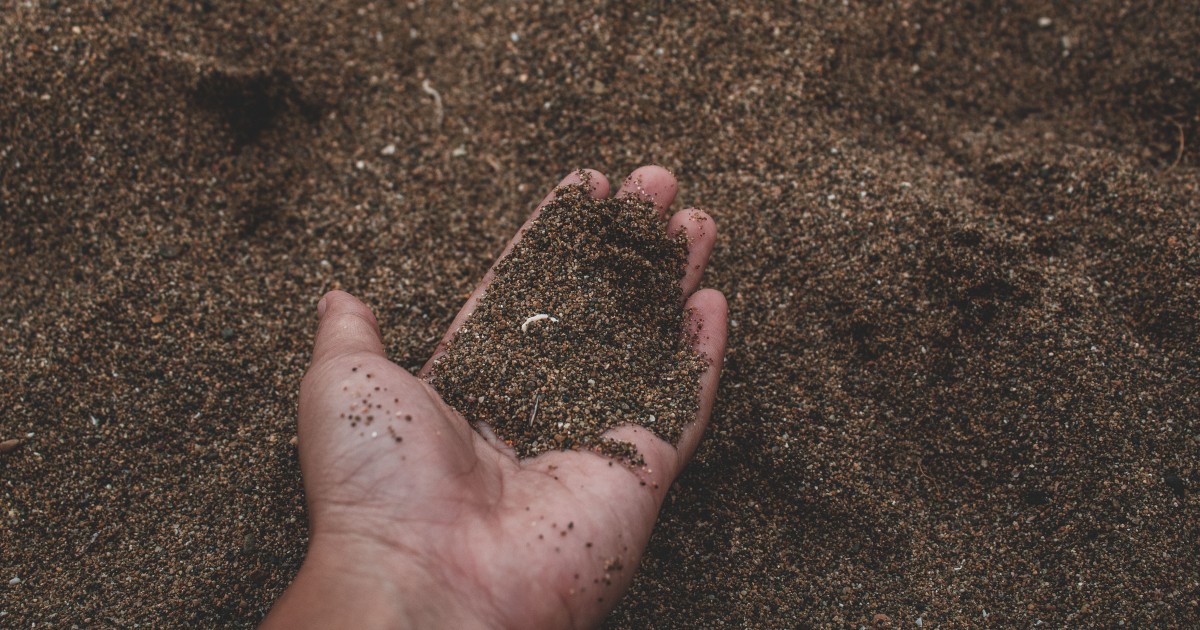
Imagine scooping up a handful of beach sand. Thousands of tiny grains slip through your fingers in seconds. Now picture every beach, every desert, every riverbank, and every coastal dune across the globe. Suddenly, the scale becomes almost impossible to comprehend.
Questions like this spark curiosity because they remind us that even ordinary things can hide extraordinary numbers.
The Short Answer
Although there is no exact count, scientists generally estimate that Earth contains approximately:
7.5 quintillion grains of sand
Written numerically, that is roughly:
7,500,000,000,000,000,000 grains
This estimate refers primarily to sand found on the world’s beaches and deserts, although the exact figure varies depending on what areas are included.
The number is so enormous that it exceeds what most people can easily visualize.
To put it into perspective, if every person alive today tried counting one grain every second without stopping, humanity would still need an extraordinary amount of time to finish counting them all.
Why It’s Impossible to Count Every Grain
At first glance, counting grains of sand might seem like a simple mathematics problem.
In reality, several challenges make an exact count impossible.
Sand Is Constantly Moving
Wind, rivers, tides, storms, and ocean currents continuously move sand from one place to another.
A beach today may contain more or less sand than it did last year.
Desert dunes also shift over time, changing their shape and volume.
Grain Sizes Are Different
Not every grain of sand is identical.
Some grains are extremely fine.
Others are much larger.
Because grain size varies so much, the number of grains within the same volume of sand can change dramatically.
Earth’s Surface Changes Constantly
Natural events continuously reshape the landscape.
Examples include:
- Coastal erosion
- Flooding
- Landslides
- Volcanic activity
- Glacial movement
- Human construction
Each of these processes can create, move, or bury sand.
Not All Sand Is Easy to Measure
Sand exists in many places, including:
- Beaches
- Deserts
- Riverbanks
- Lake shores
- Ocean floors
- Coastal dunes
- Islands
Some locations are extremely difficult to access or measure accurately.
How Scientists Estimate the Number of Grains
Instead of attempting to count individual grains, researchers estimate the total using mathematics and sampling.
The basic process involves several steps.
Step 1: Estimate the Total Volume of Sand
Scientists first estimate the amount of sand covering beaches, deserts, and other major locations.
This involves:
- Satellite imagery
- Geological surveys
- Topographic mapping
- Remote sensing technology
These tools help estimate the total volume rather than individual grains.
Step 2: Measure Average Grain Size
Researchers collect representative sand samples from different regions.
Each sample is examined to determine:
- Average grain diameter
- Grain shape
- Density
- Composition
This provides an estimate of how many grains occupy a certain volume.
Step 3: Use Mathematical Models
Once scientists know:
- Total sand volume
- Average grain size
they divide the total volume by the average size of each grain.
The result produces an estimated number of grains.
Although the answer isn’t exact, it provides a realistic scientific approximation.
What Exactly Is Sand?
Many people assume sand is simply tiny rocks.
The reality is more interesting.
Sand is a naturally occurring material made of small mineral particles.
Most sand grains measure between:
- 0.0625 millimeters
- 2 millimeters
Anything smaller is generally classified as silt.
Anything larger is usually considered gravel.
What Are Sand Grains Made Of?
The composition depends on where the sand formed.
Common materials include:
- Quartz
- Feldspar
- Coral fragments
- Shell pieces
- Volcanic rock
- Limestone
- Basalt
Quartz is especially common because it is durable and resists weathering over long periods.
Where Does All the Sand Come From?
Every grain has a long geological history.
Most sand begins as solid rock.
Over thousands or even millions of years, natural forces gradually break larger rocks into smaller pieces.
These forces include:
Weathering
Temperature changes, rain, wind, and plant roots slowly weaken rocks.
Erosion
Water, glaciers, and wind transport broken rock fragments across great distances.
River Transport
Rivers grind rocks together as they flow toward lakes and oceans.
This process creates increasingly smaller particles.
Ocean Waves
Constant wave action smooths and rounds sand grains over time.
That is why many beach sands feel softer than freshly broken rock.
Different Types of Sand Around the World
Not all sand looks alike.
Its appearance depends on local geology.
White Sand
White beaches often contain:
- Crushed coral
- Shell fragments
- Pure quartz
These beaches are common in tropical regions.
Black Sand
Black sand usually forms from volcanic activity.
It contains minerals such as basalt and magnetite.
These beaches can be found near active or ancient volcanoes.
Red Sand
Some deserts contain reddish sand because of iron-rich minerals.
Oxidation gives the grains their distinctive color.
Pink Sand
Pink beaches owe their color to tiny marine organisms mixed with white sand.
These locations are relatively rare and highly distinctive.
Golden Sand
Many of the world’s beaches appear golden because quartz grains are mixed with other light-colored minerals.
Is There More Sand Than Stars?
This comparison has fascinated scientists and educators for decades.
The answer depends on which stars you’re counting.
Stars Visible in the Night Sky
The number of sand grains on Earth is vastly greater than the stars visible to the naked eye.
Only a few thousand stars are visible without telescopes under ideal conditions.
Stars in the Milky Way
Our galaxy alone contains an estimated hundreds of billions of stars.
Even so, Earth’s sand grains still outnumber the stars in our own galaxy.
Stars in the Entire Observable Universe
When astronomers estimate all the stars across the observable universe, the total becomes extraordinarily large—far exceeding the estimated number of sand grains on Earth.
This comparison highlights both the immense scale of our planet and the staggering size of the universe.
Why This Question Fascinates Scientists
Questions about counting grains of sand are more than fun thought experiments.
They help researchers develop techniques for estimating extremely large quantities when direct counting is impossible.
Similar methods are used in fields such as:
- Geology
- Environmental science
- Oceanography
- Astronomy
- Climate research
- Resource management
Learning how to estimate enormous numbers also improves our understanding of Earth’s natural systems and encourages critical thinking about scale, measurement, and scientific reasoning.
Amazing Facts About Sand You May Not Know
Sand is something most people see every day, yet it has countless fascinating characteristics that often go unnoticed. Here are some surprising facts that reveal why sand is far more interesting than it appears.
Every Grain Has a Unique History
No two grains of sand are exactly alike. Each one has been shaped by different geological processes over thousands or even millions of years. Some grains may have originated from ancient mountains, while others came from coral reefs or volcanic eruptions.
Most Desert Sand Is Older Than Human Civilization
Many famous deserts contain sand that has been transported and reshaped by wind for countless generations. Some grains have been part of Earth’s landscape long before humans built cities or developed agriculture.
Sand Can “Sing”
Certain sand dunes around the world produce a humming or booming sound when large amounts of dry sand slide down their slopes.
Scientists believe this unusual phenomenon occurs because similarly sized grains vibrate together, creating low-frequency sounds that can sometimes be heard from a considerable distance.
Not All Beaches Have Soft Sand
Some coastlines are covered with coarse grains made from broken shells, coral fragments, or volcanic rocks.
Walking barefoot on these beaches feels very different from strolling across fine quartz sand.
Sand Exists Beyond Earth
Sand-like particles have been discovered on other planets and moons.
For example, wind shapes sand dunes on Mars, although the material differs from the quartz-rich sand commonly found on Earth.
Why Sand Is So Important to Everyday Life
When people think of sand, beaches usually come to mind. In reality, sand is one of the world’s most important natural resources.
It plays a role in many industries and products we use every day.
Construction
Sand is a key ingredient in:
- Concrete
- Mortar
- Cement mixtures
- Road building
- Foundations
Without sand, modern cities would look very different.
Glass Manufacturing
Most glass begins with silica-rich sand.
After being heated to extremely high temperatures, the sand melts and can be shaped into:
- Windows
- Drinking glasses
- Bottles
- Laboratory equipment
- Decorative items
Electronics
The silicon used in computer chips and many electronic devices comes from highly purified silica, which is derived from sand.
This means smartphones, laptops, and countless digital technologies owe part of their existence to ordinary sand.
Water Filtration
Specially prepared sand is widely used in water treatment systems to help remove particles and improve water quality.
Landscaping and Recreation
Sand is also used for:
- Children’s playgrounds
- Sports fields
- Golf courses
- Volleyball courts
- Landscaping projects
Its versatility makes it valuable far beyond beaches and deserts.
Can Earth Ever Run Out of Sand?
This question often surprises people.
Since beaches seem endless, it is easy to assume that sand is an unlimited resource.
The reality is more complex.
Not Every Type of Sand Is Suitable for Construction
One common misconception is that desert sand can easily replace construction sand.
In fact, desert sand grains are often too smooth and rounded because of constant wind erosion. Construction projects usually require sand with rougher, more angular grains that bind together more effectively.
Growing Demand
Rapid urban development has increased global demand for construction-grade sand.
As cities expand and infrastructure grows, carefully managing sand resources becomes increasingly important.
Protecting Coastal Environments
Many countries now regulate sand extraction to help reduce coastal erosion, protect marine ecosystems, and preserve natural landscapes for future generations.
Sustainable resource management continues to be an important focus in environmental planning.
Interesting Comparisons That Help Visualize the Number
The estimated number of grains of sand on Earth is so enormous that comparisons make it easier to appreciate its scale.
Consider these examples:
- It is vastly greater than the number of people who have ever lived.
- It far exceeds the number of trees on Earth.
- It is larger than the number of stars in our own galaxy.
- It represents one of the largest quantities commonly discussed in everyday science.
These comparisons remind us how difficult it is for the human brain to truly grasp extremely large numbers.
Common Misconceptions About Sand
Myth: All Sand Is the Same
Different environments produce different types of sand with unique colors, mineral compositions, grain sizes, and textures.
Myth: Beaches Never Change
Beaches are constantly reshaped by tides, storms, waves, and seasonal weather patterns.
A beach may look noticeably different from one year to the next.
Myth: Every Desert Has the Same Sand
Deserts around the world contain a wide variety of minerals and grain sizes, depending on local geology and climate.
Myth: Scientists Know the Exact Number of Grains
No one knows the precise number of grains of sand on Earth.
The figures commonly shared are scientific estimates based on mathematical models and geological observations.
What This Question Teaches Us About Science
Questions such as “How many grains of sand are on Earth?” are valuable because they encourage scientific thinking.
Instead of searching for impossible precision, scientists focus on creating reliable estimates using observation, measurement, sampling, and mathematics.
This same approach is used in many areas of research, including:
- Climate science
- Population studies
- Ecology
- Astronomy
- Oceanography
- Earth sciences
Understanding how estimates are made helps people appreciate the careful reasoning behind scientific conclusions.
Frequently Asked Questions
How many grains of sand are on Earth?
Scientists estimate there are approximately 7.5 quintillion grains of sand on Earth, although the exact number cannot be determined.
Can anyone count every grain of sand?
No. Because sand is constantly moving and exists across enormous areas, counting every grain individually is impossible.
How do scientists estimate the number?
They estimate the total volume of sand, measure the average size of individual grains, and use mathematical calculations to estimate the overall quantity.
Is there more sand than stars?
There are more grains of sand on Earth than stars in the Milky Way, but far fewer than the estimated number of stars in the observable universe.
Why is desert sand different from beach sand?
Wind shapes desert sand into smoother, rounder grains, while water and geological conditions create different textures in many beach sands.
What is the most common mineral in sand?
Quartz is the most common mineral found in sand because it is durable and resists weathering over long periods.
Can sand disappear naturally?
Sand is constantly being created, transported, and recycled through natural geological processes. However, local supplies suitable for certain uses can become depleted if extraction exceeds natural replenishment.
The question “How many grains of sand are on Earth?” may seem simple, but it opens the door to an incredible journey through geology, mathematics, environmental science, and the natural history of our planet. While no one can provide an exact count, the widely accepted estimate of roughly 7.5 quintillion grains illustrates the astonishing scale of Earth’s landscapes.
More importantly, this question reminds us that science is often about making careful, evidence-based estimates rather than achieving impossible precision. Every grain of sand carries a story of weathering, erosion, and time, reflecting geological processes that have shaped our world for millions of years.
The next time you walk along a beach or across a sandy trail, take a moment to look more closely. What appears to be an ordinary handful of sand is actually part of one of the most remarkable natural systems on Earth—one that continues to inspire curiosity, research, and discovery.
Disclaimer: This article is intended for informational and educational purposes only. The estimated number of grains of sand on Earth is based on scientific models and approximations rather than an exact count. As geological research and measurement techniques continue to improve, future estimates may differ.





Leave a Reply